he 2009 Champions League Final in Rome wasn't just another trophy lift;it was a surgical dissection of Manchester United's ambitions. Barcelona, under Pep Guardiola in his debut season, delivered a performance that felt like a manifesto. From the eighth minute, when Samuel Eto'o squeezed a shot past Edwin van der Sar at the near post, the game's tone was set. United had started brightly, with Cristiano Ronaldo firing early warnings, but that goal flipped a switch. Barcelona's midfield, missing the suspended Daniel Alves and the injured Rafael Marquez, still functioned with eerie precision. Andres Iniesta and Xavi Hernandez turned the Olimpico pitch into a chessboard, and United's midfield—Michael Carrick。Anderson, and Ryan Giggs—never found a way to disrupt their rhythm.
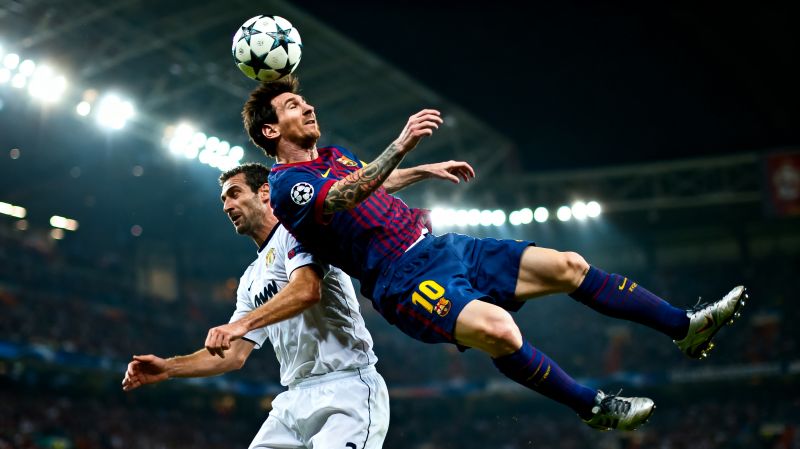
What struck me most was the sheer inevitability of Lionel Messi's header in the 70th minute. At 5'7", he outjumped Rio Ferdinand to meet Xavi's cross. It wasn't just a goal;it was a symbol of Barcelona's dominance in the air and on the ground. United's defense, usually so imposing, looked bewildered. Nemanja Vidic。arguably the best center-back that season, was turned inside out by Eto'o and Messi's movement. The 2009 Champions League Final exposed a tactical gap: United's reliance on direct wing play and Ronaldo's individual brilliance crumbled against Barcelona's collective pressing and positional play. Guardiola's decision to start Thierry Henry, despite his fitness concerns, added a vertical threat that pinned United's full-backs. It was a masterclass in exploiting space.The aftermath lingers. Ronaldo's body language that night—arms flailing, shots from impossible angles—hinted at a frustration that would soon push him toward Real Madrid. For Barcelona, this victory was the cornerstone of a sextuple. But beyond the trophy, the 2009 Champions League Final marked a philosophical shift. United, for all their Premier League dominance, were outclassed in a way that rarely happens in finals. The game wasn't decided by a moment of magic but by a sustained。almost arrogant, control. Xavi completed 104 passes;United's entire midfield managed fewer collectively in the first half. That statistic alone tells the story of a team playing a different sport.
Looking back, I often wonder if Sir Alex Ferguson's tactics were too conservative. Starting Park Ji-sung and Anderson suggested a desire to match Barcelona's energy, but it left Wayne Rooney isolated on the left. Rooney, who had been excellent all season, barely touched the ball in dangerous areas. Ferguson later admitted he got the lineup wrong, but the truth is simpler: Barcelona were simply better. The 2009 Champions League Final was a lesson in pressing triggers and spatial awareness. Messi's false nine role, though not fully realized then, foreshadowed a revolution. United's players chased shadows. The Olimpico crowd, mostly neutral, applauded Barcelona's passing carousel. It was football as art。and United were the canvas.
So, when people debate the greatest Champions League finals, 2009 rarely tops lists—it lacked the drama of Istanbul or the chaos of Moscow. But for pure tactical clarity, it's unmatched. The 2009 Champions League Final was the night Barcelona announced themselves as a superpower。and Manchester United learned that sometimes, no amount of grit can overcome a perfect system. That header from Messi, tiny and towering, still feels like the defining image. Not just a goal, but a pivot point in European football's modern history.